
Governing Board
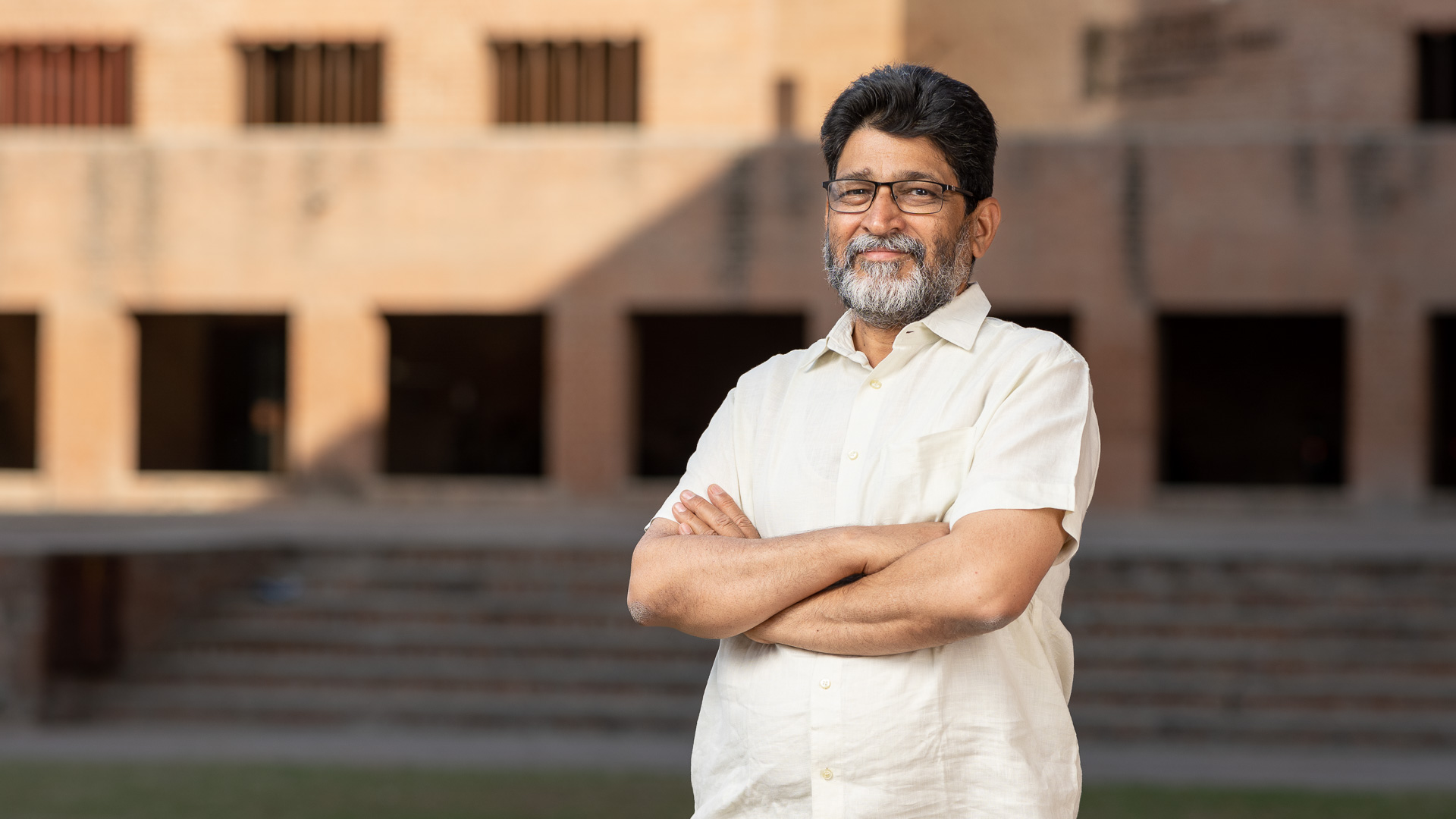
Dr. Sukhpal Singh is Professor, and former Chairperson, Centre for Management in Agriculture (CMA), Indian Institute of Management (IIM), Ahmedabad, Former Director General, Centre for Research in Rural and Industrial Development (CRRID), Chandigarh, and former Professor and Head, Agricultural Economics Research Unit, Institute of Economic Growth (IEG), Delhi.
Prof. Singh was conferred the title of the Fellow of the Indian Society of Agricultural Economics for his contributions to the discipline and the Society in 2018. He was the Conference President, Indian Society of Agricultural Marketing (ISAM) Annual Conference, 2024. He is the President Elect, Indian Society of Agricultural Economics (ISAE) Annual Conference, 2026.
He has been a visiting fellow at the IDS, Sussex (the UK), Chulalongkorn University, Bangkok (Thailand), the University of Manchester (the UK); and the Copenhagen Business School (Denmark). Prof. Singh is founding editor, Millennial Asia-an international journal of Asian studies published by Sage since 2012.
He was a member of various committees/working groups of the Planning Commission of India/NITI Aayog, National Development Council, Food Safety Standards Authority of India, and Mission on Integrated Development of Horticulture (MIDH) and a member of the National Co-operation Policy (2025) Committee. Prof. Singh is presently a member of the Government of India Committee on MSP, Natural Farming and Crop Diversification. He was a member of the standing working group on agriculture and allied sectors of Chhattisgarh State Planning Commission, and the State’s Committee on Minimum Support Price and other mechanisms, and a member of the Committee for FPO Policy in Punjab. He is a member of the Boards of Governors/Directors of many non-profits working in the agricultural and rural space, and academic bodies.
He has 15 books, the more recent being: Institutions and Public Policy for India's Sustainable Development, Routledge (2025, co-edited); India’s Producer Companies and Small Farmers: Performance and Impact, Springer Nature (2024, authored); Regulating Agricultural Markets in India- A smallholder perspective, Orient BlackSwan (2023, authored); and Reverse Subsidies in Global Monopsony Capitalism, Cambridge University Press, (2022, co-authored); and more than 170 research papers in international/national journals/edited books, and more than 100 review articles/articles in popular dailies/magazines, to his credit.
He teaches courses in Rural marketing, Agro input marketing, and Managing contract farming in post graduate programs, and Agro value chain management and development and agricultural and rural development policy in the PhD program at IIMA. He offers executive education programs in contract farming management, and rural marketing. He has taught at ISB Hyderabad/Mohali, XIM Bhuvaneswar, and IRMA.
His research focuses on value chains, contract farming, food supermarkets, organic produce, sustainability, smallholders, farm workers, agricultural input and output markets, and farmer producer companies. He has provided research support to ADB, FAO, ILO, World Bank, Oxfam, IFAD, ICCO, The Netherlands, Traidcraft, ITC of the UN, TNC, the Government of India and its agencies, and many other development agencies in India.
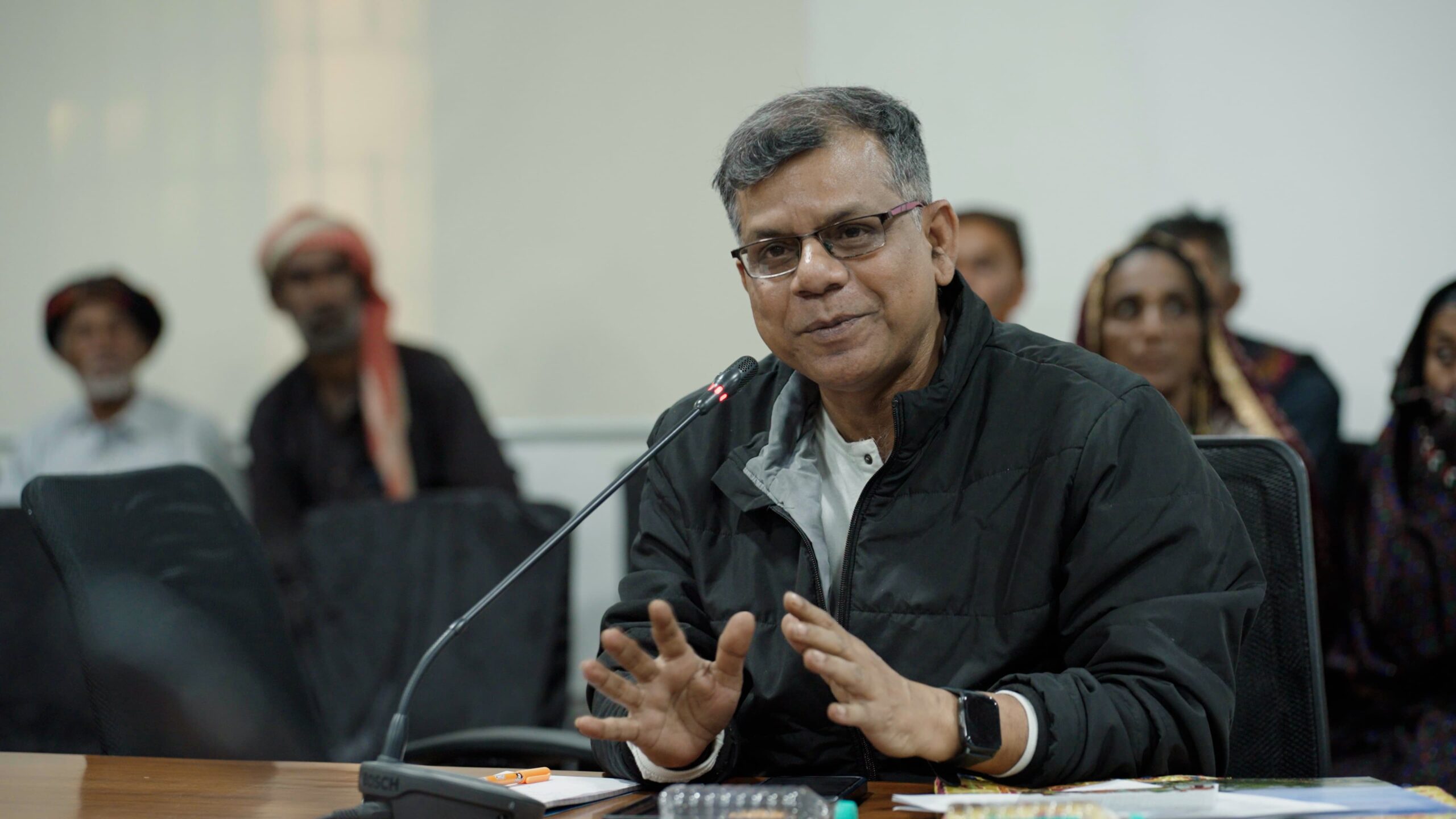
Dr. Sabyasachi Das is a seasoned development professional and expert in rainfed agriculture, natural resource management, and sustainable rural livelihoods.
He is the Director of the Watershed Support Services and Activities Network (WASSAN) in Hyderabad, where he also serves as National Coordinator of the Revitalising Rainfed Agriculture Network (RRA Network), a national coalition of researchers, practitioners and civil society organisations working to strengthen rainfed farming systems across India. In these roles, Dr. Das has over two decades of experience leading initiatives on drought adaptation, watershed development, livestock systems, policy advocacy and institution building for ecological and livelihood resilience in dryland and rainfed regions.
Mr. Magan Barariya is a progressive farmer from Kachchh, Gujarat, known for his deep practical knowledge of traditional farming systems and ecological agriculture.
Magan bhai has gained rich experience in sustainable farming, indigenous seed conservation, and climate-resilient agricultural practices suited to the dryland ecosystem of Kachchh. Through continuous learning from nature, elders, and field experimentation, he has developed practical solutions that help farmers improve productivity while maintaining soil health and ecological balance. He is involved in sharing his knowledge with fellow farmers and community members, contributing to the promotion of traditional knowledge and sustainable agriculture in the region and works as one of the trustee members at Satvik-Promoting Ecologcial Farming. His life and work demonstrate how local wisdom and experience can play a crucial role in strengthening resilient farming systems.
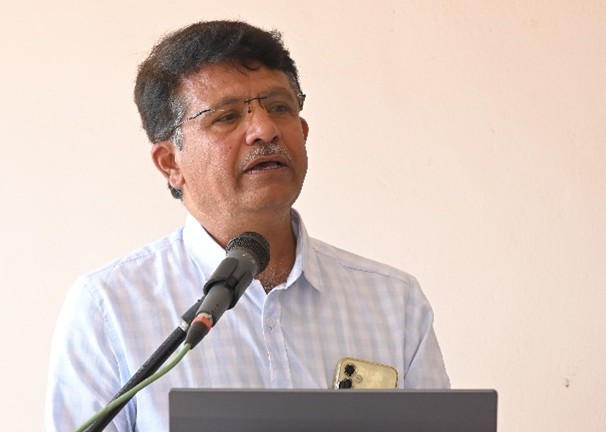
Mr. Shailesh Vyas is an agricultural scientist, rural development practitioner, and institution builder with over 26 years of experience in strengthening sustainable farming systems in the hot arid ecosystem of Kachchh, Gujarat.
A graduate in Agricultural Sciences from Gujarat Agricultural University, with a PG Diploma in Ecology & Environment and an M.A. in Economics, he specializes in ecological farming, traditional seed systems, soil fertility management, and climate-resilient agriculture.
His work includes preparing the Agriculture Action Plan for Kachchh district, developing vulnerability analysis frameworks for drought-prone communities, promoting indigenous seed conservation (ANMOL programme), and rehabilitating tsunami-affected agricultural land in Indonesia.
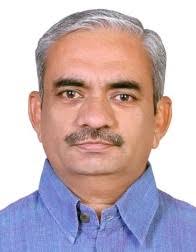
Dr. Yogesh Jadeja is a geologist and water resource management specialist with over three decades of experience in sustainable water management in arid and semi-arid regions of Gujarat.
He holds a Doctorate in Geology from Maharaja Sayajirao University of Baroda and has been working since 1993 on strengthening decentralized approaches to water resource development.
Dr. Jadeja serves as Director of Arid Communities and Technologies (ACT), where he focuses on water resource planning and management by integrating traditional geo-hydrological knowledge with modern scientific approaches. His work emphasizes community-based and region-specific strategies to improve water availability and resilience in drought-prone landscapes. He is leading one-year Diploma in Participatory Groundwater Management (D-PGWM) jointly established by KSKV Kachchh University and ACT.
He has contributed significantly to the design and implementation of watershed development and water supply projects, working closely with local communities, non-governmental organizations, and government agencies. Drawing from his field experience, Dr. Jadeja has also developed training programmes for rural youth, aimed at building a deep understanding of geo-hydrology and sustainable water resource management at the local level. At Satvik, he serves as a treasurer and his work continues to support long-term water security and ecological sustainability in dryland regions.
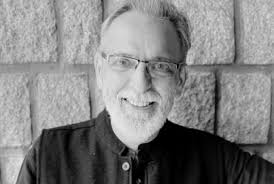
An environmentalist and architect, Sandeep Virmani has spent over three decades working with indigenous communities across India to revive traditional building crafts and ecological practices.
He is one of the founder trustees for Satvik-Promoting Ecological Farming. Over the years he has helped set up four organizations in the region, including Sahjeevan; Arid Communities and Technologies (ACT), which focuses on water in all its dimensions; Satvik, for ecological farming; and the Hunnarshala Foundation, a non-profit working towards sustainable human habitation. Through initiatives like the Centre for Pastoralism and Living Lightly – Journeys with Pastoralists, he champions the resilience of marginalized communities. His work has influenced post-disaster reconstruction in India and beyond, shaping policies and training future generations in ethical, sustainable design.
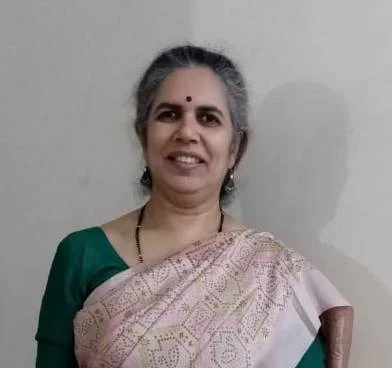
Ms. Shilpa Vasavada is a gender and community institutions specialist with nearly three decades of experience in the livelihoods and development sector.
Her work focuses on gender mainstreaming in natural resource–based livelihoods, particularly in areas such as Climate Smart Agriculture, Water, Sanitation and Hygiene (WASH), and forestry.
Over the years, Ms. Vasavada has worked with civil society organizations, international NGOs, government agencies, and CSR initiatives across multiple states in India. She has also contributed to strengthening Farmer Producer Organizations (FPOs) through gender-inclusive approaches and has been actively engaged in advancing women’s agricultural land ownership. She was the founder convener of a national network of organizations working on women’s land ownership in India. A graduate of the Tata Institute of Social Sciences (TISS), Mumbai, Ms. Vasavada is also a certified Trainer, Master Trainer, and Assessor with IFC–LPI (UK) in “Facilitating Learning.”
Registration Details
| Sr. | Registration Under | Registration No | Registration Date |
| 1 | Society Registration Act, 1860 | Guj/1355/Kachchh | 12/10/2007 |
| 2 | Bombay Public Trusts Act, 1950 | F-1541/Kachchh | 10/01/2008 |
| 3 | Section 12 AA of Income Tax Act, 1961 | 11/06/2008 | |
| 4 | Section 80G of Income Tax Act, 1961 | 11/03/2010 | |
| 5 | Foreign Contribution Regulation Act, 1976 | 42050078 | 01/11/2016 (Renewed) 29/12/2010 |
| 6 | Darpan Registration | GJ/2017/0168948 | 12/12/2017 |